According to the Randstad Research report Sustainable Energy Transition and Employment, between now and 2040 Spain could create around 150,000 jobs linked to the roll-out of renewable energy, 181,000 associated with the industrial development of green hydrogen and 118,000 resulting from energy savings. These are largely skilled and meaningful roles that require – and will continue to require – professionals with the right qualifications.
Many of the roles in demand in today’s energy sector were unheard of ten years ago. And the list gets longer every year.
Engineering professionals specialising in renewable energy sources such as solar, wind, geothermal and hydropower continue to be the most sought-after in terms of job vacancies. However, the increase of green hydrogen – a strategic enabler for decarbonising difficult-to-electrify industries such as steel, cement and heavy goods transport – is giving rise to new specialities: engineering in electrolysers, training in hydrogen logistics, regulation and certification, etc.
In summary, the most sought-after roles include:
Digital profiles specialising in data science in the energy sector, cybersecurity for critical infrastructure, and artificial intelligence applied to generation forecasting, represent the convergence of the energy industry and the technological revolution. Furthermore, roles such as sustainability managers and ESG analysts have become indispensable in any company within the sector, driven by European regulation.
This is where the business response to the talent challenge becomes apparent. Companies leading the energy transition have realised that relying on the market to provide all the profiles they need is not always viable. Developing in-house talent is a competitive advantage.
The commitment to in-house training, or upskilling and reskilling to adapt roles to new requirements is no longer specific to the human resources department, but has become a strategic corporate-level decision. In its Future of Jobs Report, the World Economic Forum estimates that around 40% of the skills required for jobs will need to change by 2030. Companies with the training infrastructure to support this transformation not only retain staff more effectively, but are also more resilient to changes in the market.
The Enagás Corporate University, which opened in 2025, is a clear example of a company that has elevated in-house training to the highest strategic level. The University comprises three institutes – Technical, Corporate and Leadership – and has facilities in Madrid, San Fernando and Zaragoza. It offers 75,000 hours of training annually and access to over 25,000 learning resources. Artificial intelligence, experiential learning and developing skills to overcome the challenges of the energy transition form the basis of the model.
Workplace climate surveys do not always accurately identify the difference between working for a company that informs you and one that listens to you. These are very different relationship models, and the most qualified professionals in the sector can distinguish between them with ease.
Organisations that are most advanced in developing an employer brand do more than simply communicate what they have to offer to the outside world. They also create internal forums for their staff to reflect on, contribute to and discuss their professional development and their future within the company. This creates a genuine, lasting bond reflected in values such as a sense of belonging, commitment, proactivity and initiative.
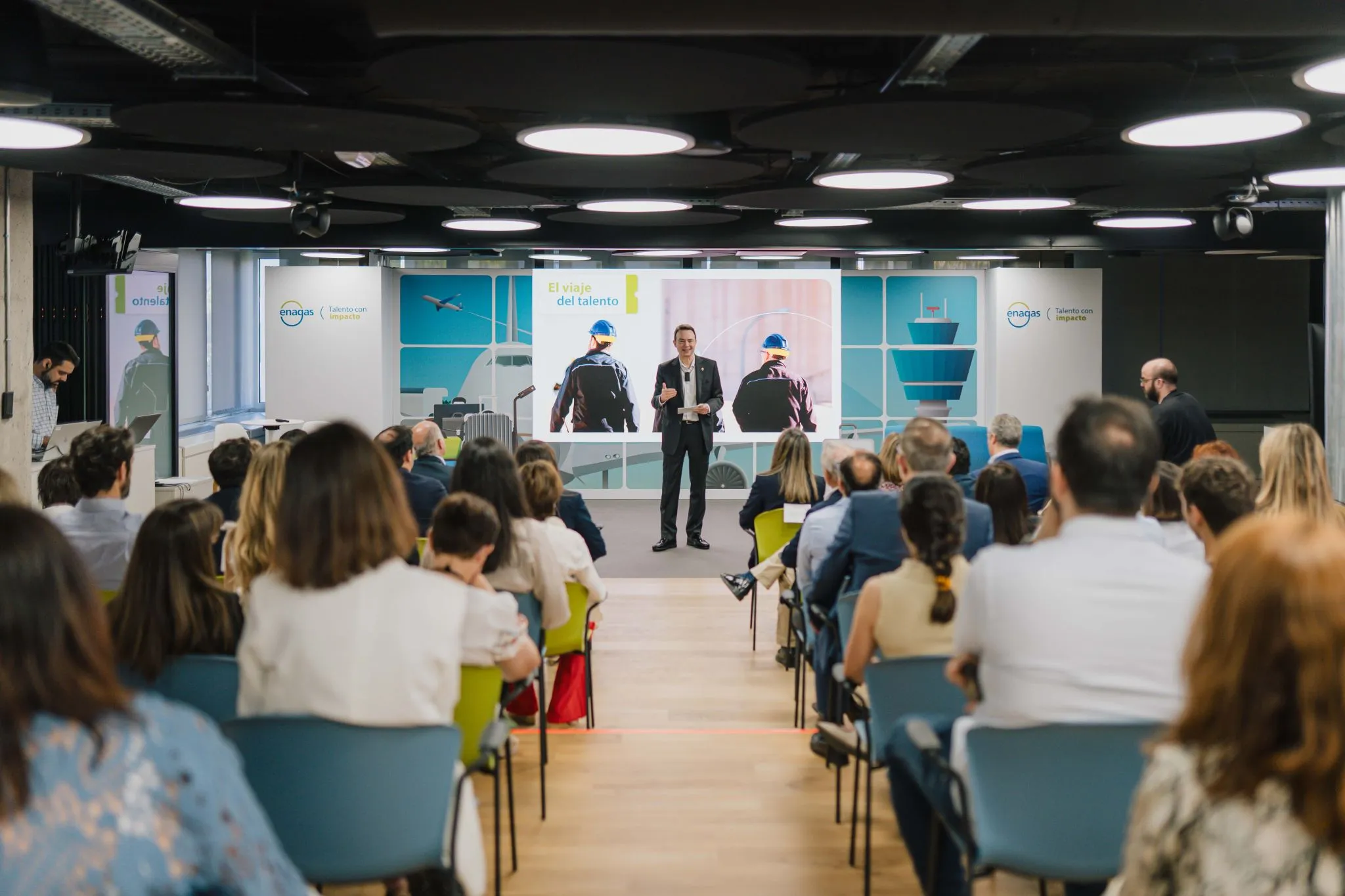
Against this backdrop, Enagás recently held an in-house employability event in this spirit. Entitled “Energy with purpose, talent with impact”, the event provided a platform for dialogue and reflection among the company’s professionals on topics such as career development, the skills of the future, and each individual’s role in the ongoing transformation of the sector. Over the course of two days, the company presented its Employee Value Proposition, promoting its employer brand through talks by leading figures.
In a market where, according to InfoJobs, nearly 70% of candidates say that the opinions of current and former employees influence their decision to apply, the best brand ambassadors are those who can describe what it’s like to progress within the company in their own words.
Quality employment in the energy sector is not just a question of pay. People also choose where to work by also taking the overall package into account. Factors such as job security, work-life balance, the industrial relations model and the company’s commitment to equality are all taken into account.
Enagás was named the world’s leading company for gender equality in the utilities sector in the annual Equileap ranking
Enagás has been certified as a Top Employer for 16 consecutive years. This annual certification is based on over 600 human resources practice indicators. The company has maintained its A+ rating as a Family-Responsible Company since 2007 and is certified as a Healthy Workplace in accordance with the World Health Organization’s protocol. Its comprehensive plan comprises over 130 work-life balance measures, ranging from flexible working hours and remote working to a Family Support Programme offering telecare and tele-pharmacy services , which can be extended to immediate family members.
In terms of equality, in 2025 Enagás was named the world’s best company for gender equality in the utilities sector by Equileap in its annual ranking. The company was awarded the Gold Seal, with women accounting for 40% of its Executive Committee. This makes it one of the most gender-balanced companies in the entire Ibex 35.
The energy transition in Spain is currently underway. The 2023–2030 Integrated National Energy and Climate Plan (PNIEC) envisages investment of over 300 billion euros in the energy transition, setting out targets that will require a huge number of skilled, dedicated and well-managed professionals. The direction is clear. What is required of companies and professionals wishing to enter the sector at this time is foresight.
Organisations that invest today in training, listening, equality and honest value propositions are building tomorrow’s competitive advantage. Professionals who choose a career in the energy sector will have one of the most promising, stable and purposeful careers over the next twenty years.
40% of job skills will change by 2030
More than 150,000 jobs in the renewables sector by 2040
70% of candidates value the company’s reputation

