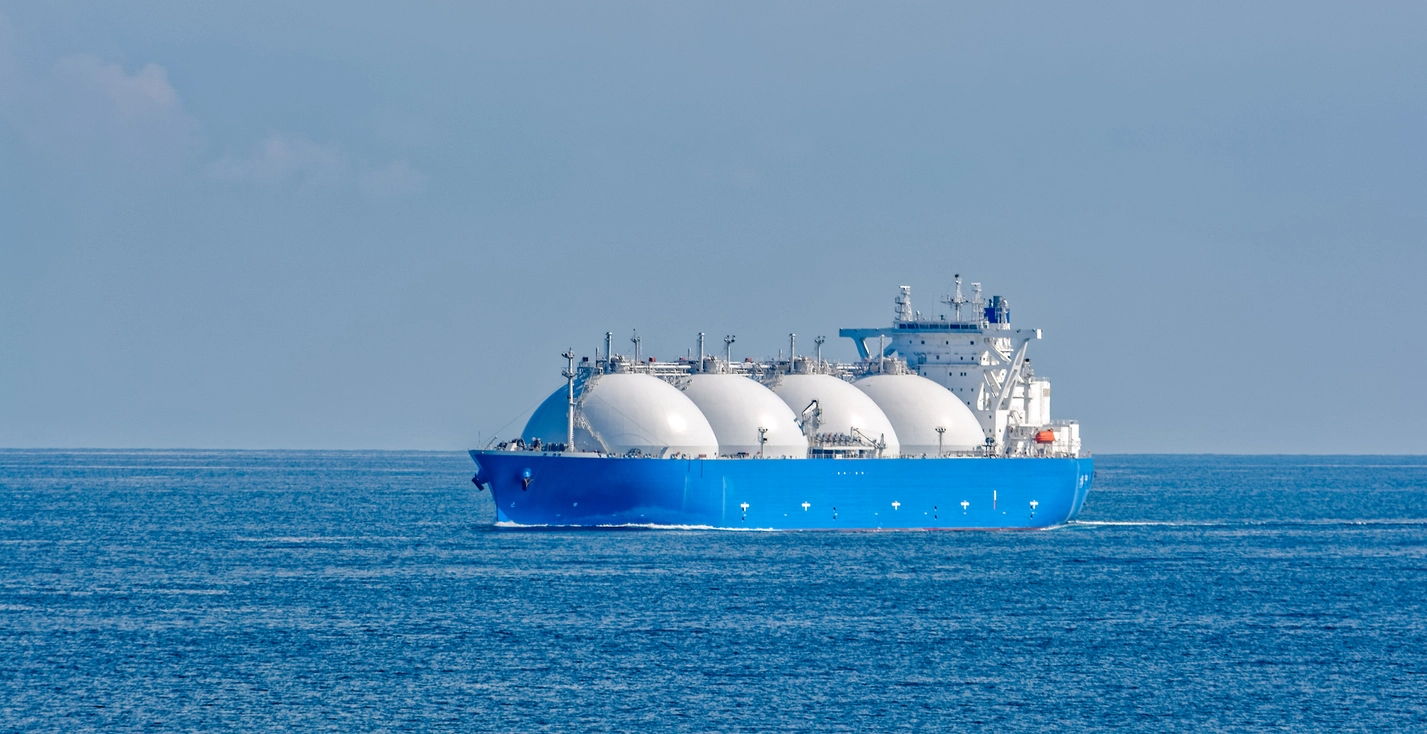
According to UN figures more than 80% of world trade is transported by sea, Maritime transport accounts for around 3% of global greenhouse gas emissions, according to the Council of the European Union. In order to achieve net-zero emissions over the coming decades, the sector is adopting alternative fuels that can reduce its environmental impact without compromising competitiveness.
One of the most significant alternative fuels is liquefied natural gas (LNG), a well-established energy solution that acts as a transition fuel, while paving the way for other renewable options such as bio-LNG or e-methane.
LNG is natural gas that has been cooled to approximately -162°C, at which point it changes from a gas to a liquid. This process reduces its volume by around 600 fold, making it easier to store and transport over long distances.
As LNG remains in a liquid state, it can be transported in LNG carriers or stored in cryogenic tanks until needed, making it an efficient energy supply solution for the shipping industry and other sectors.
The LNG value chain ranges from natural gas extraction and liquefaction to transport, regasification and supply:
1.Natural gas extraction
The process begins with the extraction of natural gas from onshore or offshore fields.
2.Processing and liquefaction
The gas is purified before being liquefied to remove water, carbon dioxide, sulphur and other compounds. It is then cooled to approximately -162°C, at which point it becomes a liquid.
3.Transport
Once liquefied, LNG is transported in specially designed LNG carriers that maintain cryogenic temperatures throughout the journey.
4.Storage and supply
At the regasification terminals, LNG can:
LNG is natural gas that has been cooled to around -162°C, at which point it changes from a gas to a liquid
International environmental regulations require a gradual reduction in emissions from maritime transport. In this context, LNG has become one of the most widely adopted alternative fuels.
Its use enables:
These advantages have driven the development of a growing international network of ports capable of supplying LNG.
In addition to its environmental benefits, LNG offers other competitive advantages:
Greater logistical efficiency
As its volume is reduced by around 600-fold, LNG can be stored and transported over long distances much more efficiently than natural gas in its gaseous state.
Mature technology
There are currently hundreds of LNG-powered vessels and a constantly expanding supply infrastructure.
Compatibility with renewable fuels
The greatest strategic advantage of LNG is that the infrastructure developed today can accommodate renewable fuels, such as bioLNG, without the need for major modifications. This is evident at the Enagás terminals in Barcelona, Huelva, Cartagena and Musel E-Hub, for example.
LNG can be stored and transported over long distances much more efficiently than natural gas in its gaseous state
One of the most key advantages of LNG is that it acts as a bridge to lower-carbon fuels.
In this regard, bioLNG is produced from biogas derived from agricultural, livestock, industrial or urban waste. Following purification and liquefaction, bioLNG has virtually the same properties as conventional LNG.
This means that bioLNG can be used in:
In this way, shipping companies can gradually reduce their emissions without having to replace their existing assets.
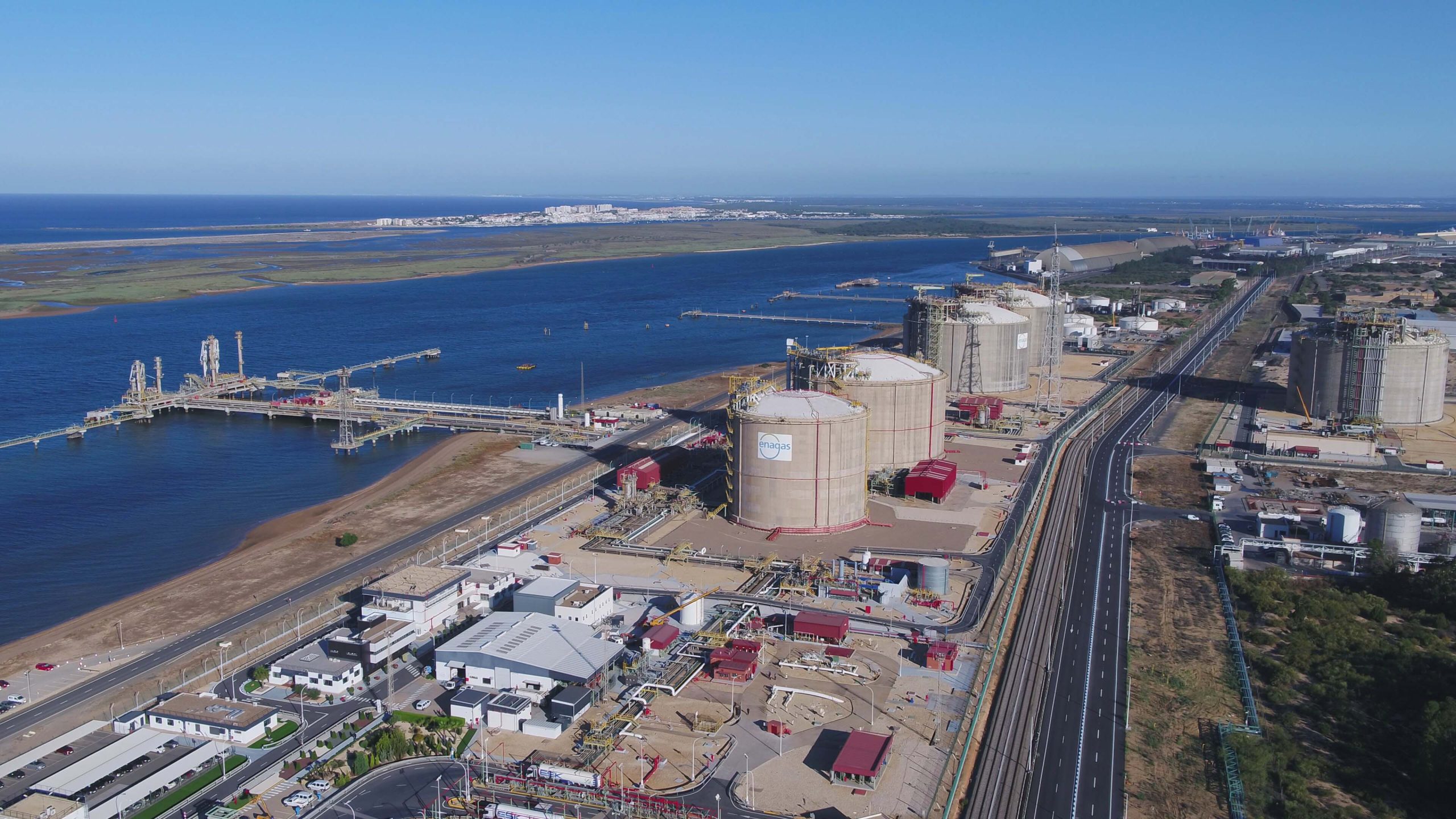
The role of LNG in the decarbonisation of maritime transport depends on the development of the infrastructure required to ensure its supply. Spain has established itself as one of Europe’s leading players in this field thanks to its network of regasification terminals, its strategic location, and the growth of LNG bunkering operations.
During his speech at the Green Gas Mobility Summit 2026, organised by Gasnam, the Chief Executive of Enagás, Arturo Gonzalo, highlighted that 8.1 TWh of LNG was supplied for bunkering in Spain in 2025. This volume placed the country ahead of the port of Rotterdam and increasingly close to Singapore, one of the world’s largest ship refuelling hubs.
According to Gonzalo, these figures show that Spain “competes in the top tier of global transport” and has the conditions required to become a hub for sustainable mobility.
In this context, the transport of the future is expected to be multi-technological and multimodal, with different energy solutions coexisting according to the needs of each application. Within this roadmap, LNG and bio-LNG will serve as transitional technologies, while renewable hydrogen and its derivatives will gradually become more prominent. Indeed, the International Energy Agency (IEA) estimates that hydrogen and its derivatives could account for approximately 25% of the energy demand for transport by 2050, particularly in sectors that are hard to electrify, such as maritime transport and aviation.
Rather than competing with one another, these technologies are set to complement each other. LNG enables immediate reductions in emissions and makes use of existing infrastructure, while bio-LNG and other renewable fuels will support the transition towards shipping with an ever smaller carbon footprint.
The International Energy Agency (IEA) estimates that hydrogen and its derivatives could account for approximately 25% of the energy demand for transport by 2050
The energy transition in maritime transport will involve a variety of solutions, depending on the type of vessel and its operational requirements.
In addition to bioLNG, the sector is researching and developing other fuels including:
All of these will contribute to the decarbonisation of maritime transport, although LNG will continue to play a key role as a transition technology over the coming decades.
What does LNG stand for?
LNG stands for liquefied natural gas, which is natural gas that has been cooled to approximately -162°C, to convert it into a liquid that is easier to transport.
What is the difference between LNG and natural gas?
The chemical composition is practically the same. The difference is that LNG is in liquid form as a result of a liquefaction process that reduces its volume by around 600-fold.
Why does the shipping industry use LNG?
Because it helps reduce pollutant emissions and comply with international environmental regulations and support the transition towards low-emission shipping while fully renewable fuels are being developed.

